The accelerated growth of e-commerce has transformed the way we consume, shop, and expect to receive our products. Today, millions of people make online purchases every day and demand fast, flexible, and reliable deliveries. This new dynamic has driven a concept that is redefining logistics infrastructure worldwide: Last-Mile Distribution Centers.
In this blog, we explain what they are, why they are gaining relevance in Mexico and Latin America, and how, at Hermosillo, we are prepared to design and build these spaces, from small facilities for urban operations to large-scale logistics projects for market leaders.
What Is a Last-Mile Distribution Center?
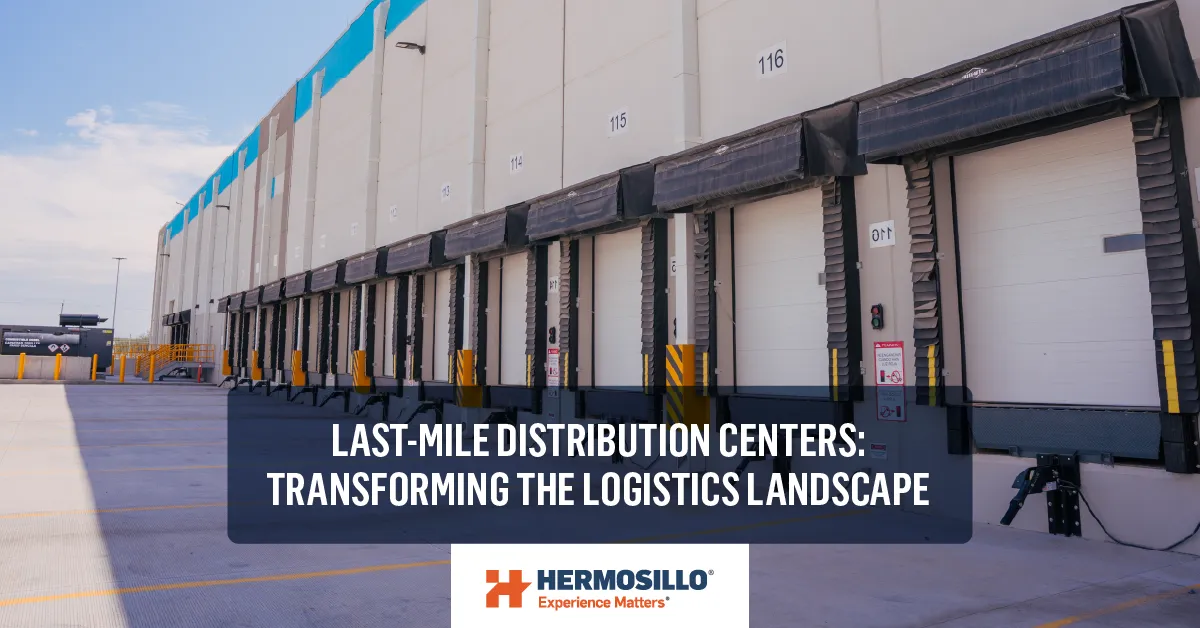
Last-mile distribution centers are facilities strategically located within or very close to urban areas, designed to handle the final stage of a package’s journey: its delivery to the end consumer.
Traditional distribution centers typically range from 107,600 sqft to over 968,400 sqft and are located in peripheral logistics corridors, while last-mile centers:
- They are much smaller (generally under 107,600 sqft, and often 53,800 sqft or less).
- They are located within the city to shorten distances and reduce delivery costs.
- Operate at speedy cycle times, with variable routes and high parcel turnover.
- Incorporate greater technology and automation, such as sorting systems, sensors, and route management tools.
It is important to remember that the last mile is the most expensive stage of logistics, so efficiency at this point is key to ensuring competitive delivery times.
Differences Between a Traditional Distribution Center and a Last-Mile Distribution Center
Although both types of infrastructure are essential to the supply chain, their design and operation respond to very different needs.
Design and Operation
- Last-mile: fast-picking areas, sorting zones, docks for vans, route automation, agile flows.
- Traditional: high-density racks, large truck yards, cross-docking areas, and bulk storage.
Size
- Last-mile: <107,600 sqft
- Traditional: from 107,600 sqft up to 1,011,440 sqft or more.
Location
- Last-mile: within the urban area.
- Traditional: outside the city, in industrial zones with available land.
Operation
- Last-mile: same-day deliveries, short and dynamic routes.
- Traditional: storage, consolidation, and long-distance shipping.
Why Are These Centers Growing in Mexico and LATAM?
Three main trends explain the expansion of last-mile centers:
- E-commerce boom: After the pandemic, online shopping adoption grew exponentially. Today, buying online is part of everyday life, thanks to reliable platforms and more intuitive digital processes.
- Expectation of fast deliveries: Consumers now expect same-day or next-day deliveries, which forces companies to set up nodes much closer to residential areas.
- Growing purchasing power and economic stability: Factors such as low inflation, stable exchange rates, and higher technology penetration are boosting online consumption.
The Impact of E-Commerce on the Demand for Logistics Infrastructure
The growth of e-commerce has not only increased the volume of orders but also created the need to expand distribution points within cities.
At Hermosillo, we have seen this trend firsthand. We have actively participated in regional distribution centers and large logistics projects that support e-commerce operations across Mexico.
Some notable projects include:
- Walmart Bajío and Chihuahua–
- Mercado Libre (3 projects) in Hidalgo, 2 projects in Guadalajara, and 1 project in Monterrey
- Amazon Monterrey
- AutoZone
- Liverpool
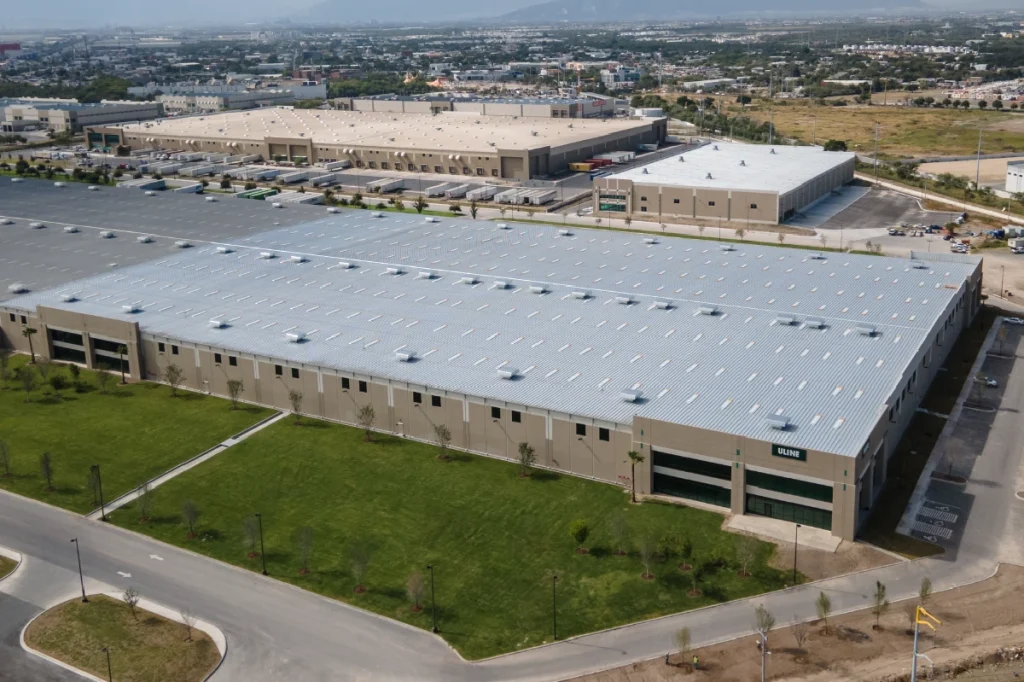
- ULINE
- Mabe
- Whirlpool
- Chedraui
- OXXO
- And many speculative buildings for major developers throughout the biggest cities in Mexico.
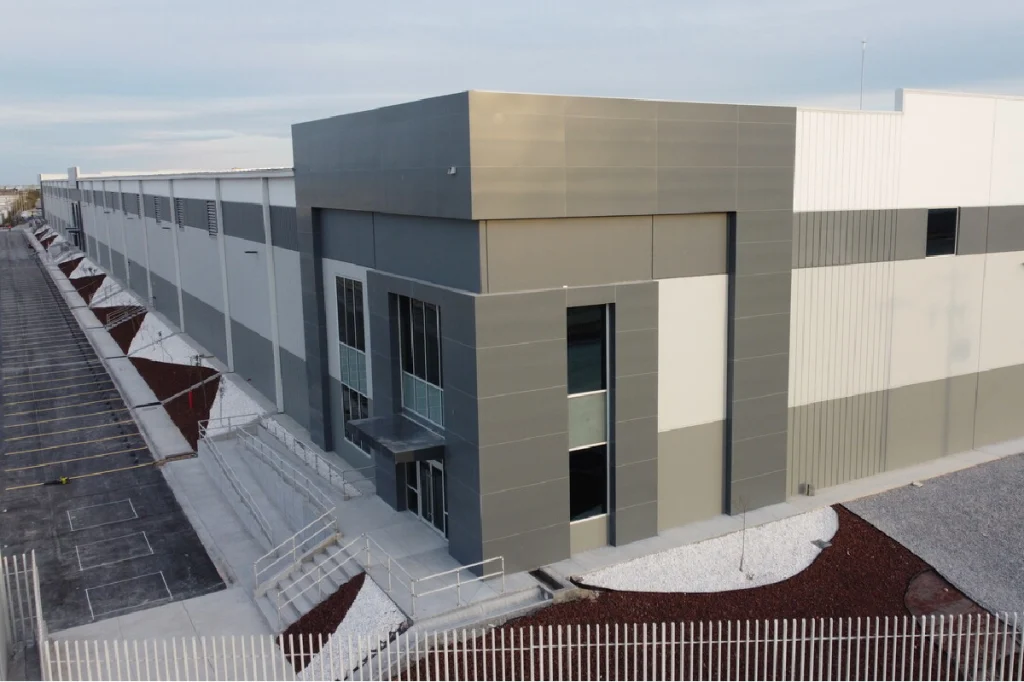
These facilities are often subdivided into modules ranging from 26,900 sqft to 53,800 sqft, ideal for last-mile companies looking for ready-to-operate spaces in strategic locations.
The Importance of Strategic Location
Choosing the correct location is the most critical factor for the success of a last-mile center. It must offer:
- Proximity to high-demand areas.
- Efficient road access.
- Land that allows for maneuvering and operations.
- Connectivity with regional hubs.
- Available infrastructure (power, data, drainage).
How Do BIM and Lean Construction Support This Type of Project?
At Hermosillo, we integrate methodologies that add value from the earliest stages through to project delivery.
BIM enables us to:
- Coordinate architecture, engineering, MEP, racks, and automation in a single model.
- Verify clear heights, logistics flows, aisles, and forklift routes.
- Detect clashes before construction.
- Optimize yards, roadways, and operational areas.
- Reduce approval times with clients and vendors.
Lean Construction helps to:
- Plan efficiently through Pull Planning.
- Eliminate slack and downtime.
- Minimize rework and waste.
- Meet tight construction schedules.
These methodologies are especially valuable in projects where every day of operation counts.
Hermosillo: Your Partner for Logistics Projects
While last-mile centers tend to be smaller than traditional distribution centers, both are part of the same e-commerce value chain. At Hermosillo, we have the experience, technology, and team to develop logistics projects of any scale, from speculative industrial buildings to highly automated distribution centers for market-leading companies.
We have built thousands of square meters for companies such as Amazon, Mercado Libre, Walmart, AutoZone and the major developers, and many others, contributing to the growth of Mexico’s logistics infrastructure.
If your company is looking to design and/or build a distribution center—whether macro, regional, or last mile—we are ready to help. Contact us to discuss your next logistics project. Together, we can build the infrastructure your operation needs to grow in the e-commerce era.