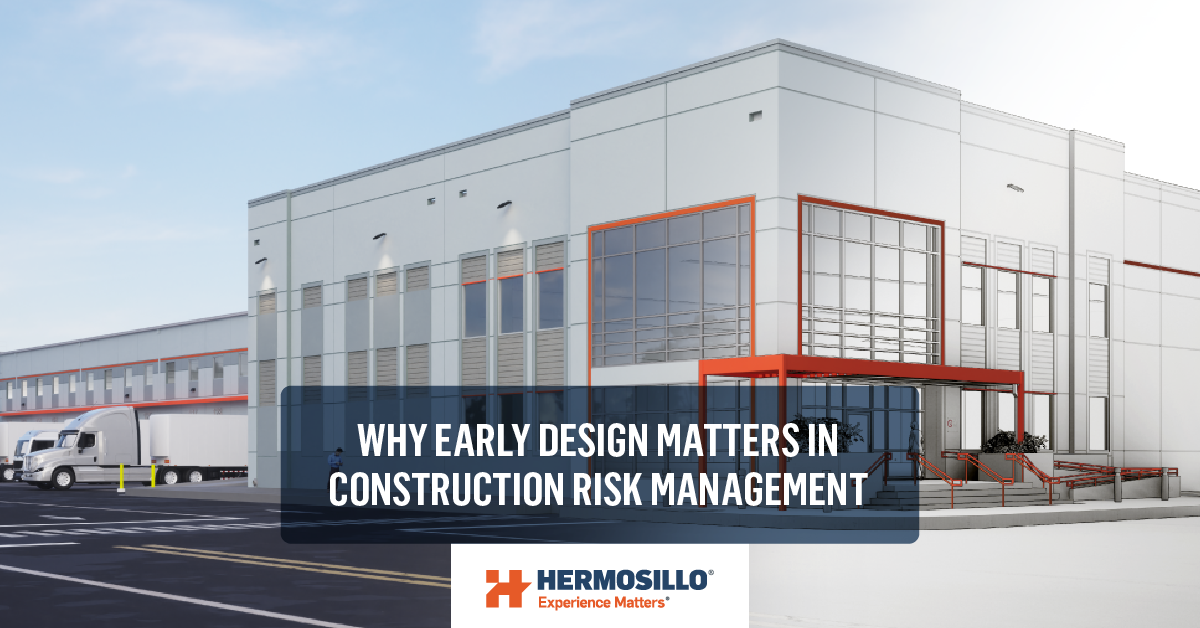
In construction—especially in the industrial sector—large-scale developments are characterized by complexity, high investment, and a heightened risk of incidents due to the number of simultaneous activities during execution. For this reason, risk management does not begin during construction, but much earlier: in the preconstruction and design stages.
Many of the issues that arise during construction stem from poor decision-making during preconstruction and design. From regulatory compliance to multidisciplinary coordination and financial feasibility, risks that go undetected early can significantly impact a project’s overall success if not properly managed.
This article explores why identifying and mitigating risks from the outset is essential to achieving more efficient, cost-effective, and successful projects.
Why Risk Identification Should Start in the Design Phase
Risk identification is the foundation upon which any risk management strategy is built. It is not simply about listing potential problems or setbacks, but rather a systematic, collaborative, and preventive process for recognizing, describing, and classifying events or conditions that could negatively impact project objectives.
One of the most important principles in risk management is that it should begin in the earliest stages of a project—ideally during conceptual design.
At this stage, critical decisions are made regarding:
- Land use and regulatory constraints
- Infrastructure availability (water, drainage, power, connectivity)
- Environmental and regulatory requirements
- Site conditions, topography, and hydrological considerations
- Client operational needs
When these factors are not evaluated early, projects often face adjustments, delays, cost overruns, or even serious safety incidents with irreversible human and material losses.
A thorough early assessment of project risks allows teams to anticipate these scenarios, understand their potential impact during construction, and establish effective mitigation strategies.
In fact, one of the most common risks is failing to fully understand the client’s needs or to clearly define the project scope from the beginning.
Common Risks Originating in the Design Phase
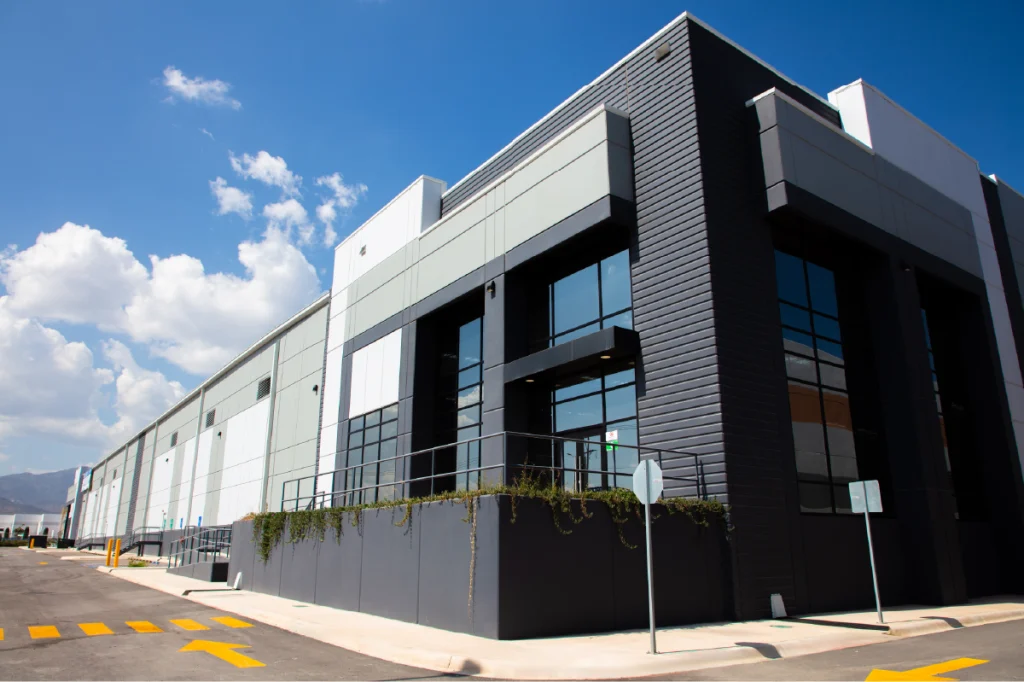
Designers, engineers, and project teams have a fundamental responsibility to consider the safety and well-being of end users in every decision. Choices regarding materials, spatial configuration, systems, and operational procedures have a long-term impact on the prevention and occurrence of industrial and workplace incidents.
1. Incomplete or unclear project definition
When a project begins without clear objectives, defined operational requirements, or established financial goals, the level of risk increases significantly.
This may lead to:
- Misaligned design solutions
- Late-stage changes
- Cost increases
Understanding the client’s operations and return-on-investment expectations from the outset is essential.
2. Regulatory and compliance risks
It is critical to consider local regulations, environmental requirements, and even insurance standards from the beginning, as they can have significant implications.
Key risks include:
- Incorrect land use
- Challenges in obtaining construction permits
- Non-compliance with safety regulations
- Environmental restrictions
When identified late, these issues often require redesigns or adjustments during construction.
3. Lack of coordination between disciplines
One of the most common risks in industrial projects is poor coordination between architecture, structure, and MEP systems.
This can result in:
- System and discipline clashes
- Insufficient space for installations and maintenance
- Rework during construction
In industrial facilities, where systems are more complex, this risk becomes even more critical.
4. Site underutilization or poor planning
Another major risk is failing to fully realize the site’s potential.
This can lead to:
- Inefficient land use, reducing overall profitability
- Poorly designed internal flows (pedestrian vs. vehicular)
- Lack of flexibility for future expansion
- Reduced operational efficiency
Proper planning must consider both current needs and future growth.
5. Financial misalignment
Designing without considering the client’s financial constraints can compromise project viability.
For this reason, it is essential to apply approaches such as Target Value Delivery, a design phase in which the team fully understands the client’s needs and available investment, allowing the project to be developed in alignment with these objectives from the outset. In this approach, the design is continuously adjusted to meet both operational requirements and financial limits.
Without this alignment, there is a risk of developing projects that are not financially viable.
The Role of Preconstruction in Risk Mitigation
The preconstruction phase is essential for anticipating and reducing risks before construction begins.
During this stage, teams can:
- Review and validate project information and scope
- Analyze constructability
- Coordinate all disciplines and ensure collaboration among subcontractors
- Identify potential conflicts
- Evaluate alternative solutions and optimize materials or systems
- Develop a more detailed construction schedule
Addressing these aspects early helps reduce:
- Rework during construction
- Project delays
- Cost overruns
- Downtime caused by a lack of labor, materials, or equipment
In summary, preconstruction enables projects to enter the construction phase with greater clarity, reduced risks, and increased certainty.
How Technology Enhances Risk Detection
Today, tools such as BIM (Building Information Modeling) have transformed the way risks are managed in construction.
Through digital models, teams can:
- Integrate all disciplines into a single 3D model
- Detect clashes before construction begins
- Visualize the project holistically
- Simulate construction sequencing (4D) and costs (5D)
- Enable collaboration among all project stakeholders, including end users
This allows teams to identify risks that would otherwise only become apparent during construction—when their impact is significantly greater.
Best Practices for Managing Risk from the Start
Risk management does not end with the delivery of design documents. Design acts as a critical bridge between concept, execution, and operation. A well-developed, prevention-oriented design provides the foundation for an effective risk management strategy throughout the project lifecycle.
Decisions made during design directly influence the feasibility and effectiveness of mitigation measures implemented during construction.
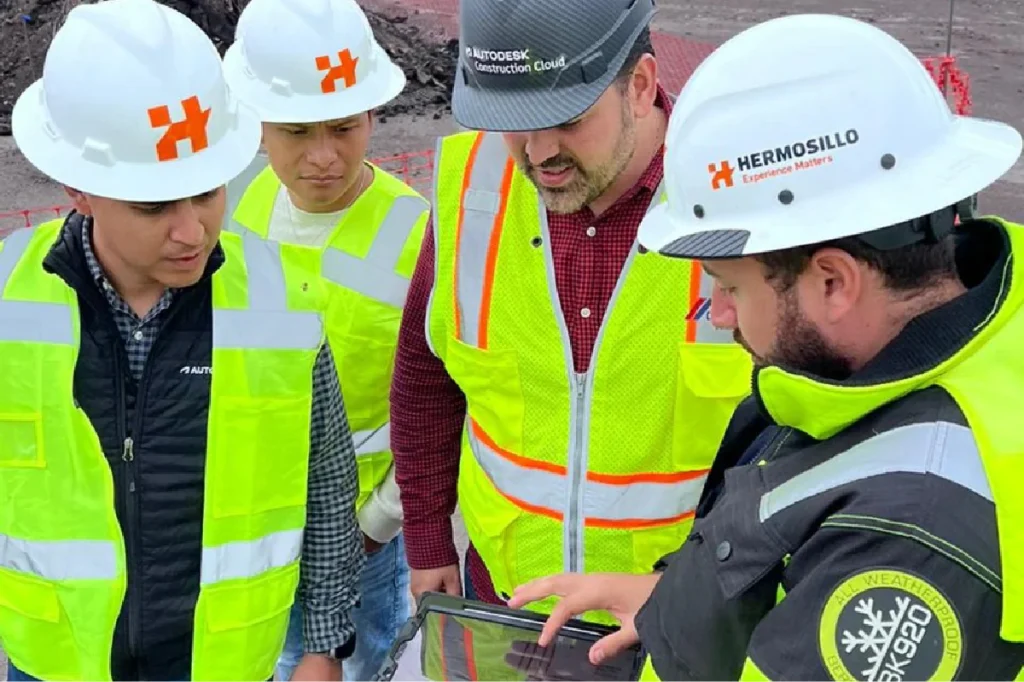
Based on Hermosillo’s experience, effective risk management begins with an integrated approach:
- Involve all key stakeholders from the early stages
- Clearly define project scope and client needs
- Validate regulatory and site constraints
- Use digital tools from the outset
- Align design with financial objectives
- Implement Lean methodologies
A Smarter Approach to Risk Management
At Hermosillo, we understand that successful projects begin with effective risk management.
Through our design-build approach—combined with BIM, Lean methodologies, and more than 60 years of experience—we help clients identify and mitigate risks from the earliest stages of their projects.
This allows us to deliver well-coordinated, optimized solutions that are ready for execution with greater certainty—giving our clients the confidence that their projects will be completed on time, within budget, and to world-class quality standards.
Final Thoughts
In industrial construction, risks are not the exception—they are inherent to every project. However, the difference between a successful project and a problematic one lies in when and how those risks are managed.
Anticipating risks during the design phase enables better decision-making, resource optimization, and the avoidance of costly adjustments during execution. Rather than reacting to issues in the field, the goal is to prevent them from the start.
Today, the combination of experience, Lean Construction methodologies, Target Value Delivery approaches, and advanced digital tools transforms risk management into a true competitive advantage.
Because in the end, it’s not just about building—it’s about building with certainty, efficiency, and vision from day one.