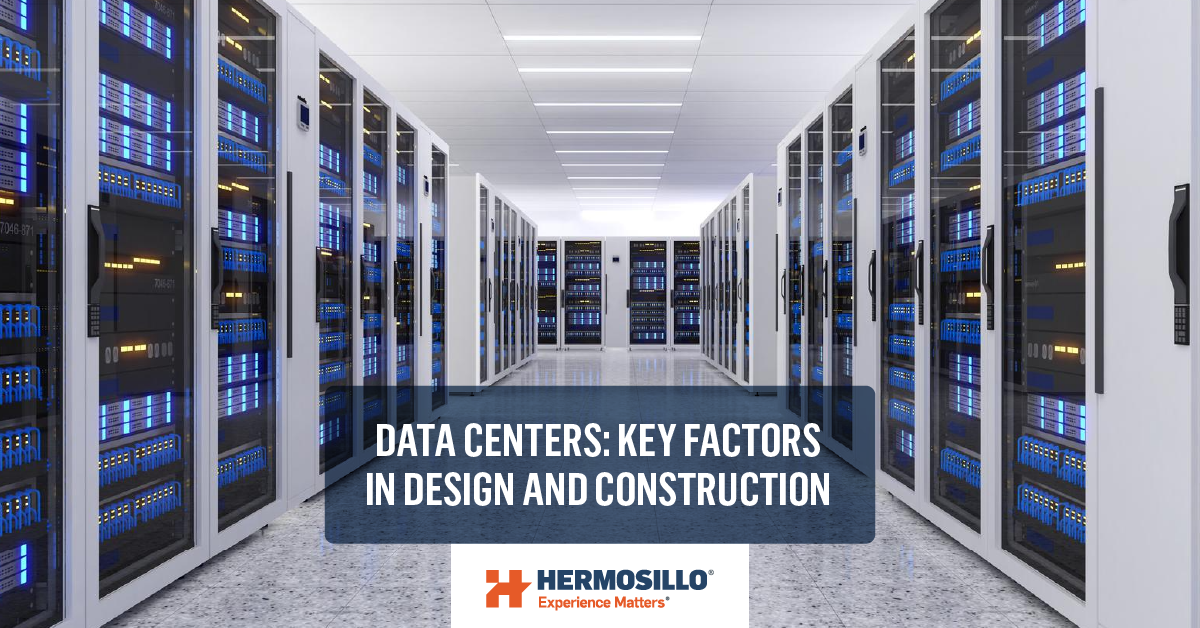
Digital infrastructure demand continues to grow rapidly, driven by artificial intelligence, cloud services, industrial automation, and large-scale data processing. As a result, the data center construction process has become a strategic priority for companies worldwide.
However, building a data center involves far more than constructing a facility filled with servers. A successful data center construction process requires highly specialized planning, robust electrical infrastructure, advanced cooling systems, and precise coordination between technical and construction disciplines.
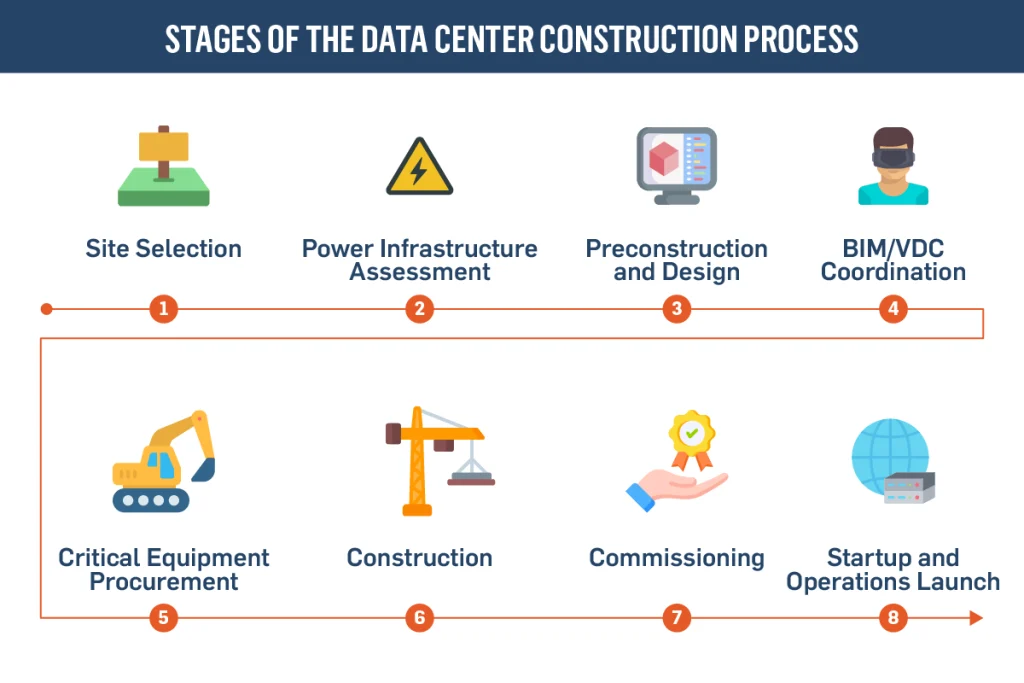
In this article, we explore key aspects of the data center development process, from site selection and preconstruction to technology coordination, scalable design, and operational reliability.
Data Center Planning Starts Long Before Construction
One of the most common misconceptions is believing that the data center construction timeline begins once on-site construction starts. In reality, much of a project’s success depends on decisions made during early planning and preconstruction stages.
Before a single shovel hits the ground, the project must undergo a rigorous planning and site-selection process.
Unlike traditional industrial projects, data centers depend heavily on critical factors such as power availability, connectivity, land use, zoning requirements, climate conditions, and future expansion capacity. These elements must be evaluated early to ensure the facility remains viable, efficient, and scalable in the long term.
According to Hilario García, Senior Superintendent at Hermosillo, preconstruction is critical to avoiding delays, cost overruns, and conflicts between trades. He says coordination between structure, architecture, and MEP systems is fundamental from the earliest stages.
For critical infrastructure projects, factors such as power availability, future expansion capacity, climate conditions, and site logistics must be evaluated from the beginning.
In addition, the type of facility being developed directly affects the project’s complexity. Miguel Ángel Rendón, MEP Superintendent at Hermosillo, explains that defining redundancy levels early is essential:
“It is very important to determine the level of redundancy required for the Data Center: TIER I, II, III, or IV. For a TIER IV facility, both electrical and HVAC redundancies are critical and significantly increase system complexity.”
Smart data center planning also relies on virtual modeling tools that help forecast future capacity needs, avoiding oversized systems that could negatively impact long-term operational efficiency and investment.
At this stage, BIM for Data Centers plays a critical role by improving interdisciplinary coordination, enabling more accurate budgeting, and increasing transparency throughout the project lifecycle.
Electrical Infrastructure: The Core of Every Data Center
If there is one factor that determines the success or viability of a data center project plan, it is electrical infrastructure. Especially as modern facilities support increasingly demanding IT environments such as high-density GPU clusters and AI workloads. These systems require a massive, stable, and uninterrupted power supply to maintain continuous operations.
Modern data centers require enormous amounts of electricity to continuously operate servers, telecommunications systems, cooling equipment, and backup infrastructure. For this reason, power availability and reliability are among the most important requirements for data center infrastructure during site selection.
From the earliest planning stages, electrical systems design must consider redundant utility feeds, high-capacity power distribution, uninterruptible power supplies (UPS), and backup power generation strategies to support operational continuity.
Víctor Peralta, Senior Construction Manager, emphasizes that having access to a reliable power supply is the priority; without it, the project practically fails.
Similarly, Emmanuel Carmelo, Construction Manager at Hermosillo, notes that one of the first challenges is ensuring sufficient energy and water availability in the selected region.
Beyond primary utility power, operational continuity requires highly reliable backup systems and redundancy strategies. Depending on the facility type, backup systems may need to provide several hours—or even days—of autonomy.
Power quality is equally important. As Miguel Ángel Rendón explains, any disturbance in the electrical supply wave can potentially shut down the entire Data Center.
This growing demand for electrical infrastructure is also driving expansion across related industries. Manufacturers are increasing production of large power transformers, electrical systems, HVAC equipment, automation systems and specialized infrastructure components that support the data center ecosystem
Additionally, renewable energy integration is becoming increasingly important, not only from a sustainability perspective, but also for long-term operational efficiency and cost optimization.
The Challenge of Cooling and Thermal Management
One of the greatest challenges in data center design and construction is heat management.
Servers continuously generate massive amounts of heat, making advanced cooling strategies essential for maintaining operational reliability. Factors such as exterior temperature, humidity, insulation, HVAC capacity, airflow distribution, and energy consumption must all be carefully evaluated during the design phase.
HVAC systems must be designed with extreme precision to account for local climate conditions, potential heat spikes, equipment density, and long-term operational demand. Effective airflow management remains essential, especially for controlling hot spots and maintaining stable temperatures across server rooms.
Through Computational Fluid Dynamics (CFD) analysis, engineers can model airflow and temperature distribution within server rooms to optimize cooling performance and improve energy efficiency.
Hilario García explains that “depending on the requested floor type—raised floor, epoxy, anti-static, or high-resistance systems—the concrete specifications and construction criteria also change.”
These construction decisions are directly connected to cooling performance, since flooring systems, plenum spaces, insulation, and room configuration can influence airflow distribution and heat removal strategies.
Today, the industry is also exploring liquid cooling technologies and high-efficiency thermal management systems to reduce operational energy consumption.
Technological Coordination: BIM, VDC, and Lean Construction
The data center construction management process involves extensive coordination between electrical systems, mechanical infrastructure, telecommunications, fire protection, and specialized equipment.
In this environment, digital tools and collaborative methodologies become essential.
BIM (Building Information Modeling) for Data Centers enables teams to detect clashes before physical installation begins, reducing rework and improving coordination between disciplines.
According to project experts, the most common conflicts typically occur between HVAC systems, fire protection, telecommunications, voice and data systems and electrical cable trays.
Additionally, Lean Construction methodologies help optimize workflows, reduce waste, and maintain continuous coordination between trades—particularly important in projects with aggressive schedules.
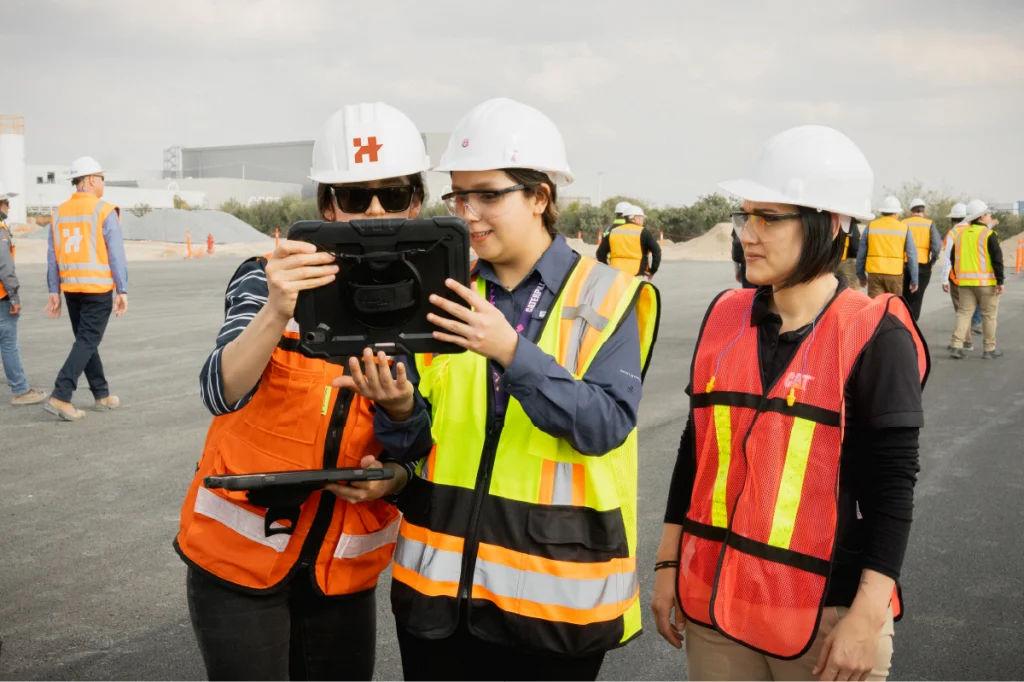
At Hermosillo, integrating tools such as BIM, Lean Construction, Procore and Primavera P6, helps maintain control over critical milestones such as Fiber Early Access (FEA), Network Early Access (NEA), commissioning, and startup operations.
Scalability and Speed: Priorities in Modern Data Center Development
Today, companies are increasingly seeking scalable data center design strategies that allow infrastructure to grow alongside future processing and storage demands.
As a result, flexibility and scalability have become key priorities in data center design and construction.
Clients are looking for facilities capable of expanding organically without requiring major redesigns or operational disruptions.
At the same time, speed has become a major competitive advantage within the data center construction process. Early procurement of long-lead equipment such as generators, transformers, and HVAC systems is critical to avoiding schedule delays.
According to project specialists, procurement management is currently one of the most important challenges affecting the data center construction timeline.
Beyond Data Centers: Growth Across an Entire Industry
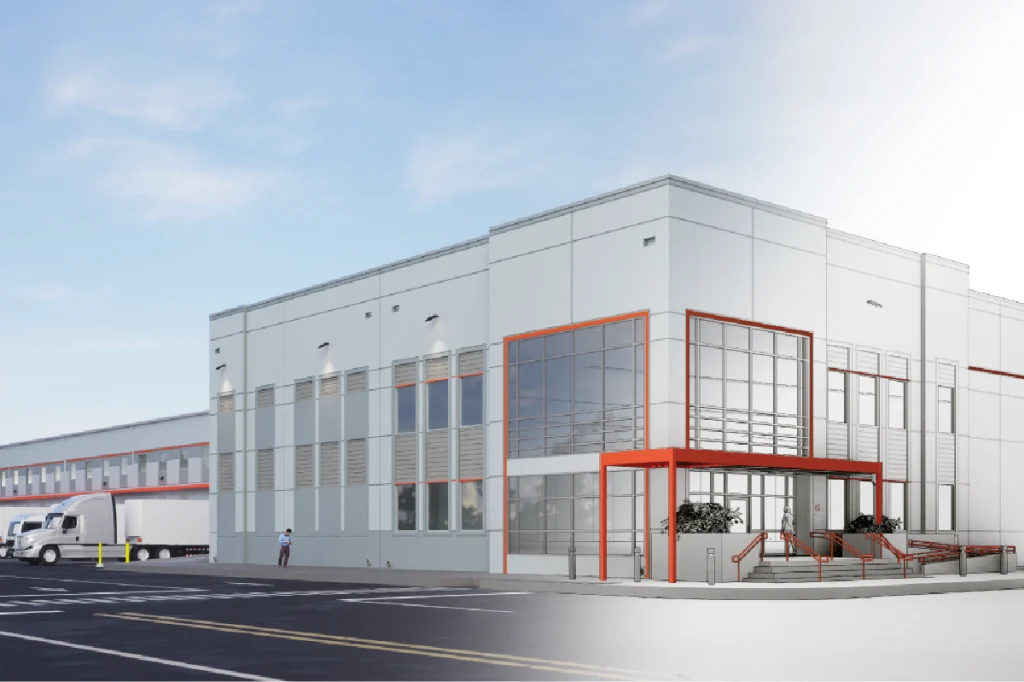
The expansion of data centers is also driving growth across multiple industrial sectors.The surge in data center construction is becoming a catalyst for broader industrial growth, creating a ripple effect across manufacturing, energy, technology, and specialized construction markets.
Today, many manufacturers are expanding operations to produce critical components for digital infrastructure projects, including:
- power transformers
- HVAC systems
- backup power equipment
- automation technologies
- cooling solutions
- and electrical infrastructure systems
This demand is creating new opportunities for specialized industrial construction projects and advanced energy infrastructure development across multiple regions.
The impact also extends to specialized maintenance services, fiber optic network management, and DCIM (Data Center Infrastructure Management) systems that enable centralized monitoring and control of critical assets.
As a result, data center projects are not only supporting digital infrastructure; they are also accelerating the development of adjacent industrial sectors and setting higher expectations for reliability, security, and operational excellence.
Critical Infrastructure for an Increasingly Digital World
The growing demand for digital infrastructure will continue to accelerate the development of data centers and the industries that support them. From electrical systems and specialized manufacturing to advanced construction processes and critical infrastructure, these projects are redefining the future of industrial development.
At Hermosillo, we understand the importance of delivering industrial projects with high levels of coordination, efficiency, and operational reliability. Through tools such as BIM, VDC, and Lean Construction, we help clients execute complex projects prepared for the future of digital infrastructure.
If you are planning to develop industrial infrastructure, specialized manufacturing facilities, or projects related to the growth of the digital economy, our team can support you from the earliest stages of planning and preconstruction. Contact us.
BLOQUE FAQ
What is the most important factor when building a data center?
The most important factor when building a data center is the availability and reliability of electrical infrastructure. A data center requires large amounts of power to continuously operate servers, cooling systems, and backup equipment.
Why is preconstruction so important in data center projects?
The preconstruction phase helps define key aspects, including electrical capacity, redundancy, MEP coordination, logistics, and the procurement of critical equipment. Proper planning helps reduce delays, clashes, and cost overruns during construction.
What technologies help optimize data center construction?
Tools such as BIM, VDC, and Lean Construction methodologies help coordinate complex installations, detect clashes before construction, optimize work sequences, and improve overall project efficiency.
How is the growth of data centers impacting the industry?
The growth of data centers is driving the development of energy infrastructure, specialized manufacturing, HVAC systems, transformers, automation, and other sectors related to critical infrastructure and technology.