As sustainability becomes a priority for developers and investors, construction systems play a critical role in reducing environmental impact while delivering long-term value.
Sustainability has become a defining factor in industrial and commercial development. Today, projects are no longer evaluated solely on cost or construction speed—developers, investors, and end users are increasingly focused on long-term environmental performance, operational efficiency, and resilience. As a result, green construction and sustainable construction practices are shaping how modern facilities are designed and built.
According to REsimpli, the global green buildings market—valued at approximately USD 565.33 billion in 2024—is projected to surpass USD 1.37 trillion by 2034, reflecting the accelerating worldwide demand for sustainable development strategies.
Within this evolving landscape, Tilt-Up construction continues to gain momentum. While it is widely recognized for its speed and structural performance, it is increasingly valued for its ability to support environmentally responsible decisions without compromising functionality or long-term value.
Sustainability Starts with Early Decisions
A building’s environmental footprint is largely determined before construction begins. Design and preconstruction decisions, such as choosing materials, construction systems, and planning logistics, directly affect carbon emissions, waste, energy use, maintenance, and operational efficiency.
By selecting construction systems that support sustainable construction practices from the outset, project teams can reduce environmental impact while optimizing performance throughout the building’s lifecycle. Tilt-Up stands out as a strategic option precisely because it addresses these variables early on.
Reduced Material Waste and On-Site Efficiency
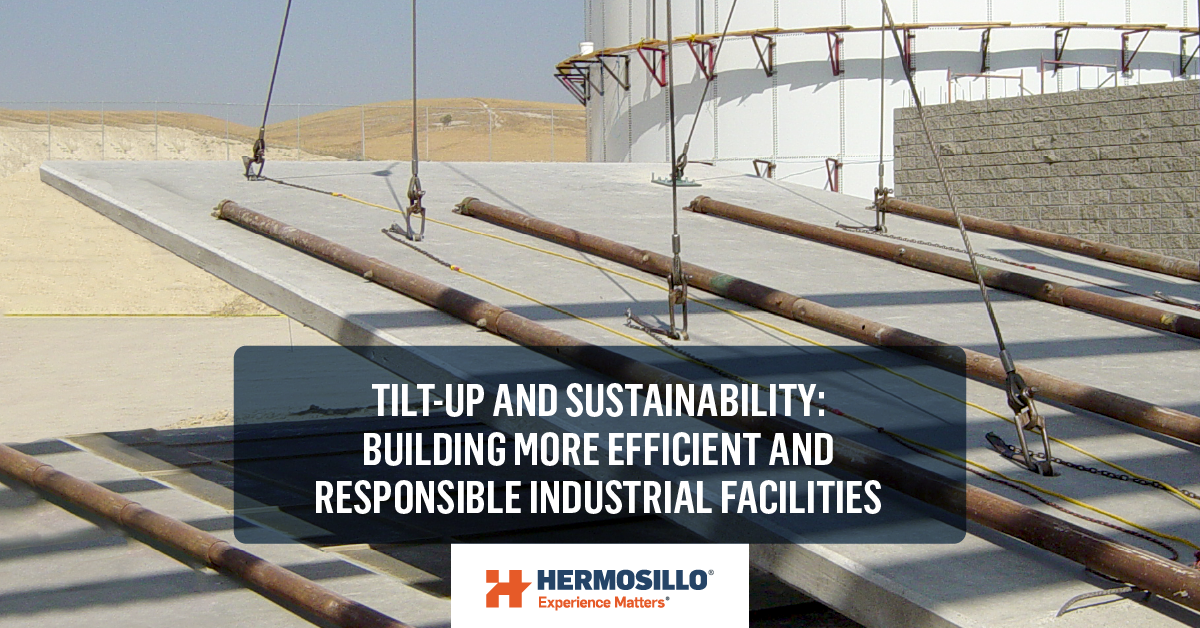
One of the main sustainability advantages of Tilt-Up construction is the controlled casting of concrete panels horizontally on the building’s floor slab or a temporary casting bed directly at the construction site. This approach—similar in principle to modular construction and factory-style assembly—allows for precise control over the amount of concrete and reinforcement used, significantly reducing material waste compared to traditional construction methods.
This controlled process supports green construction by:
- Reducing material waste during construction
- Minimizing excess components sent to landfills
- Promoting the efficient use of environmentally friendly construction materials through accurate planning and execution
In addition, Tilt-Up construction allows for the use of low-CO₂ concrete mixes, depending on regional availability and supplier capabilities. By incorporating supplementary cementitious materials or alternative formulations, it is possible to reduce the embodied carbon of concrete by approximately 30% to as much as 90%, without compromising structural performance, strength, or architectural appearance.
Less waste and lower embodied carbon translate directly into reduced environmental impact and improved construction efficiency. By limiting construction and demolition debris, decreasing raw material extraction, and reducing transportation and landfill use—factors widely recognized by the U.S. Environmental Protection Agency as key drivers of sustainable construction practices—Tilt-Up contributes to more responsible and resilient building solutions.
Lower Transportation Emissions and Shorter Execution Times
Because Tilt-Up panels are fabricated on site, projects require fewer material deliveries and reduced long-distance transportation, resulting in lower fuel consumption and fewer greenhouse gas emissions.
At the same time, Tilt-Up construction significantly reduces execution time. Shorter construction schedules mean:
- Less time operating heavy machinery
- Lower energy consumption during the construction phase
- Reduced disruption to surrounding areas
Faster execution not only improves project timelines and return on investment but also limits the site’s prolonged environmental impact.
Energy Efficiency and Operational Performance
Sustainability extends well beyond the construction phase. In many cases, the operational stage accounts for the largest portion of a building’s environmental footprint, according to Life Cycle Assessment (LCA) studies. Operational energy use typically accounts for the largest share of total carbon emissions in conventional buildings, often exceeding the impact of construction and material production combined.
Tilt-Up concrete panels provide high thermal mass, which helps stabilize interior temperatures and reduce reliance on heating and cooling systems. Over time, this results in lower energy consumption and reduced operating costs, reinforcing long-term sustainability goals.
Reduced Maintenance and Long-Term Durability
From a lifecycle perspective, durability is a core tenet of sustainability. A building that lasts longer and requires fewer repairs consumes fewer resources over its lifetime. Tilt-up structures, built with reinforced concrete, are renowned for their exceptional structural integrity and longevity.
- Long service life
- Resistance to fire, wind, and seismic forces
- Minimal maintenance requirements over time
By reducing the need for frequent repairs, repainting, or replacements, Tilt-Up construction helps lower long-term maintenance costs while conserving resources and extending the useful life of the building.
In addition, Tilt-Up offers cleaner lines and a more robust exterior appearance, maintaining its aesthetic quality and structural integrity over decades of operation.
More Usable Space and Operational Flexibility
Beyond its direct environmental benefits, tilt-up construction enhances the functional efficiency of industrial and commercial buildings. By using the exterior wall panels as the primary load-bearing system, this method often eliminates the need for perimeter columns. Removing these obstructions provides facilities with key advantages:
- More usable interior space
- Increased flexibility for layout and operations
- Greater storage capacity, allowing racks to be placed directly along long wall spans
This extra efficiency is very useful in logistics and industrial buildings. Every square meter of usable space affects how well they operate.
Alignment with Green Construction Goals
As investors and corporate tenants increasingly prioritize Environmental, Social, and Governance (ESG) criteria, the choice of construction systems is pivotal for meeting sustainability expectations. Tilt-up construction directly supports these objectives and aligns seamlessly with leading green building certifications.
Tilt-Up supports:
- ESG-focused investment strategies
- Green construction frameworks such as LEED® or Net Zero (when combined with additional efficiency measures)
- Corporate commitments to responsible and sustainable development
When integrated early in the planning process, Tilt-Up construction becomes a key contributor to comprehensive sustainability strategies.
Explore More About the Tilt-Up System
If you’d like to expand your knowledge of the Tilt-Up system, we invite you to explore two of our blog posts that approach this construction method from complementary angles:
- Tilt-Up Construction Explained in 3 Minutes: Process and Benefits: A practical, technical guide that clearly explains the construction process, key considerations for efficient execution, and the system’s main operational benefits.
- Tilt-Up: Efficient Construction with Sustainable Benefits: An in-depth look at Hermosillo’s experience with Tilt-Up, focusing on its environmental impact, alignment with our corporate sustainability strategy, and contribution to certifications like LEED®.
Each article offers a different perspective on Tilt-Up, providing a well-rounded understanding of its application in industrial and logistics projects—from technical execution to long-term value and sustainability.
Building Smarter, Not Just Faster
Today, choosing a construction system is no longer just a technical decision—it is a strategic one. Tilt-Up construction offers a balanced solution that combines faster execution, long-term durability, reduced maintenance, operational efficiency, and environmental responsibility. When integrated with modern tools such as Building Information Modeling (BIM) and advanced construction technologies, the system continues to evolve, delivering greater precision, coordination, and more consistent sustainability outcomes.
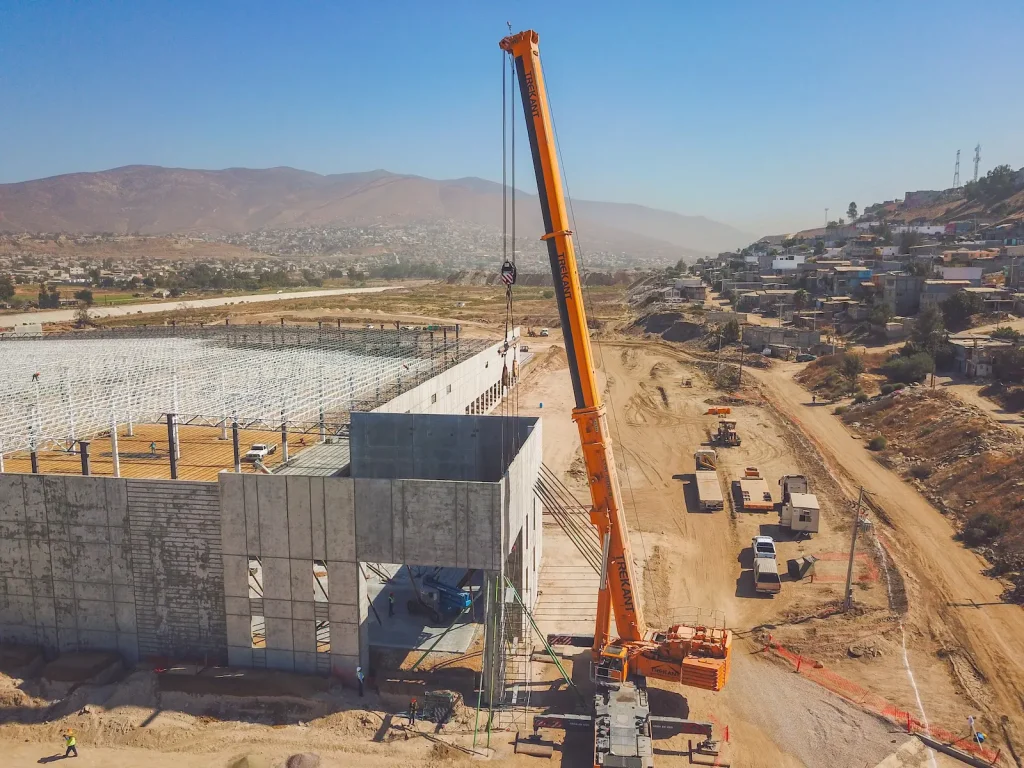
At Hermosillo, this approach is supported by decades of experience and continuous innovation. We are leaders in Tilt-Up design and construction in Mexico, and were among the first companies to build Tilt-Up facilities in the country. Over the years, we have refined this system through real-world execution, delivering 162 Tilt-Up projects, all developed under a design-build scheme, which allows for tighter integration between design, planning, and construction.
To date, our experience represents more than 3,979,924 m² (38,971,318 SF) of Tilt-Up construction, executed across 15 of Mexico’s most industrialized states, including Baja California, Nuevo León, Chihuahua, Jalisco, San Luis Potosí, Guanajuato, Aguascalientes, Tamaulipas, Estado de México, Sonora, Hidalgo, Tlaxcala, Zacatecas, and Tabasco. This geographic diversity has strengthened our understanding of different regulatory environments, climates, logistics conditions, and operational requirements.
This accumulated experience reinforces a core belief: sustainability starts with informed decisions. Selecting construction systems that support green construction and sustainable construction practices from the earliest project stages can make a measurable difference throughout a building’s entire lifecycle—benefiting not only the environment, but also long-term performance, resilience, and value.