Mexico remains one of the largest and most consistent markets in the Food & Beverage industry. In the fourth quarter of 2025, the country’s food manufacturing industry alone equated to approximately 1.48 trillion Mexican pesos in nominal GDP.
And the sector’s strength doesn’t seem to be stopping anytime soon. Manufacturers across the country are benefiting from the stability of Mexico’s economy. From facility repairs and expansions to new plants, business owners are ready to invest in their manufacturing projects.
Consequently, investors are looking for the best-built and most efficient facilities. In this post, you’ll learn about the challenges and opportunities contractors face in designing and developing Food and Beverage facilities, including what drives food and beverage facility construction costs on a project like yours.
Overview of the Food & Beverage Industry in Mexico
Manufacturing is Mexico’s thing. It is one of the country’s most significant GDP contributors and plays a substantial role in global value chains.
That includes the Food & Beverage market.
According to recent statistics, Mexico is the second-largest food processor in Latin America, behind Brazil, and ranked as the 10th-largest food producer in the world in 2023. Likewise, Mexico’s National Institute of Statistics and Geography (INEGI) found that food manufacturing accounted for 21.4% of the country’s entire manufacturing GDP, highlighting the industry’s massive role in Mexico’s overall economy.
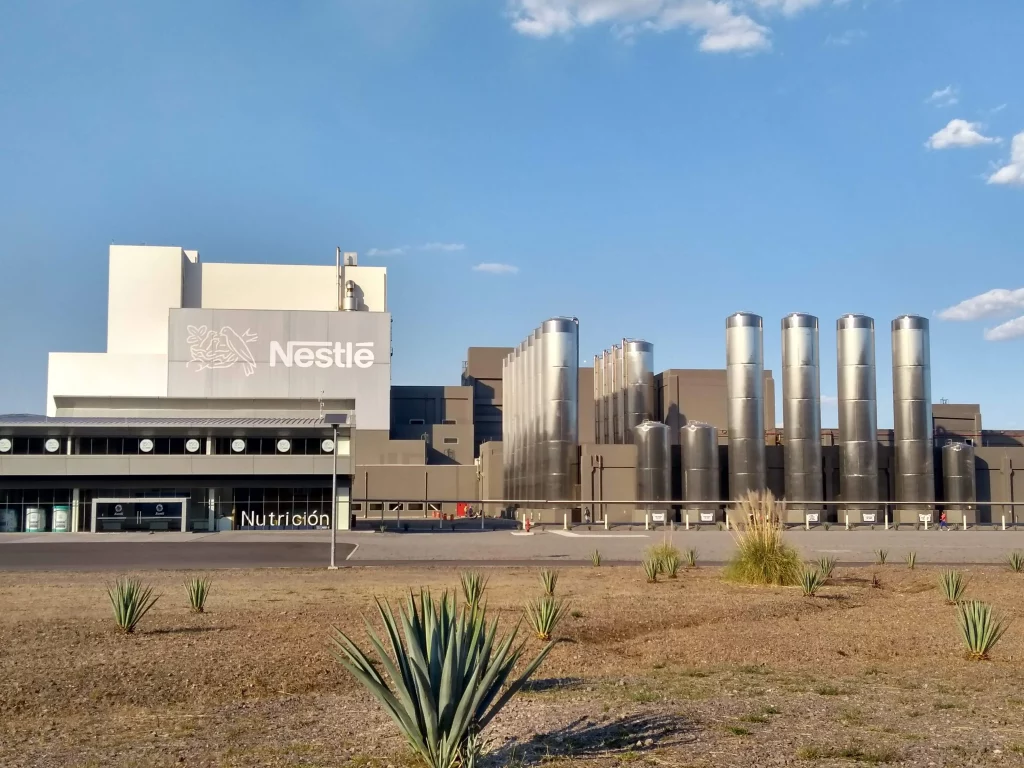
This success stems from Mexico’s unparalleled worldwide relationships, geographical advantage, and strong economy. Treaties like the USMCA (United States-Mexico-Canada Agreement) place Mexico as an attractive destination for foreign investment. For example, from January to September 2021, foreign direct investment for the food and beverage industry was US$219M. To that point, Mexico is the second-largest export market for consumer-ready products, just behind Canada, and recognized globally for its processing abilities in dairy, meat, corn, and bakery goods.
Overall, the Mexico Food & Beverage industry is thriving, with an extremely bright future ahead of it. As food and beverage contractors, Hermosillo is evolving with the industry to understand new needs and trends in facilities to match this growth. On that note, let’s look at some of the biggest challenges facing food and beverage manufacturers.
What Are The Main Challenges When Building A Food & Beverage Facility?
- Materials. Material selection is critical. For starters, this industry’s health and safety standards are strict and well-defined. Further, you must consider the brand’s grading production, as it will play an essential role in what materials are required. One of the most used materials or covering finishes in F&B facilities is stainless steel because it is easy to maintain and works well with raw materials and finished products. However, what works well depends on the facility. When we build in Mexico, we look to localize materials so they can be sourced inside the country. That shortens lead times and keeps costs predictable. But when a material has to come from abroad, we have to plan the schedule around it.
- Design. This one, too, is a material-related concern. The design team must ensure that the initial proposal considers multiple materials. You must show your client more than one version of their facility, each built around a different material approach.
This task also relates to ‘localizing‘, as it involves finding ways to reduce costs by delivering various options based on the materials available in the country. Of course, you must focus on making a functional building as well, so you must remove any elements that don’t add value to the design.
In this type of project, the production line must meet all criteria and be as streamlined as possible. The design must also cater to the facility’s users. Design, as a result, needs to consider the well-being of the people working there, as in safety and usability.
- Hygiene. As mentioned previously, the health conditions inside the facility are essential. The main concern is to ensure that the facilities-building environment does not encourage the growth of bacteria or accumulation of food and dust inside the main elements.
- Guidelines. This type of manufacturing line has many rules and technical requirements. We suggest developing these projects in accordance with both FDA (Food and Drug Administration) and TIF (Federal Inspection) standards (as granted by the Secretary of Agriculture and Rural Development). These last guidelines are used when a project handles products related to the slaughter and processing of meat in Mexico.
- Expansions. Building an expansion on an already existing plant without interrupting production is one of the biggest challenges in the industry, requiring considerable planning. A thorough plan is essential, one that considers everyone involved in the project and facility, including the facility end-users (your client’s production team).
This collaboration will help you build a successful facility while simultaneously avoiding setbacks in its production.
What Drives Food and Beverage Facility Construction Costs
Cost on a food and beverage project is set early. You commit most of your budget during design process decisions by people reading drawings, long before a crew ever reaches the site. Specifically, these are the drivers that move the early numbers most.
Site and Soil Conditions
Ground conditions decide how much you spend before the slab goes down. Test early. What the soil report says about bearing capacity and water table will shape your foundation scope and your site work budget together.
- Bearing capacity, which determines foundation depth and reinforcement
- Water table depth, which affects drainage and below-grade work
- Existing utilities and how far service runs have to reach
- Grading and site drainage across the parcel
Process Utilities
Food and beverage plants carry heavier utility loads than standard industrial buildings. Steam, compressed air, and process water all need capacity planned at the design phase, sized against your production volume rather than the square footage of the building.
- Steam generation and distribution for cooking and sterilization
- Process water treatment and wastewater handling
- Compressed air for packaging and pneumatic conveying
- Electrical capacity sized for production equipment loads, above what the building alone draws
Cold Storage
Refrigerated space costs more per square foot than ambient space. The difference comes from insulation, vapor barriers, floor systems rated for freezer temperatures, and refrigeration equipment that has to keep running when something fails.
- Insulated panel systems and continuous vapor barriers
- Refrigeration equipment and redundancy for product protection
- Floor systems rated for freezer temperatures
- Door and dock configurations that hold temperature
We build cold storage and temperature-controlled space directly into processing operations, so the refrigerated envelope is designed with the production line rather than added around it.
Sanitary Design
Hygiene requirements shape material selection across the whole facility layout. Food safety outcomes get decided on the drawings, in sanitary design choices about surfaces, drainage, and how product moves through the building. Not on site.
- Stainless steel surfaces and epoxy coatings in production zones
- Sloped floors and drainage that clears standing water
- Coved wall-to-floor junctions that resist bacteria growth
- Separation between raw product, processing, and finished goods
Equipment Coordination
Production equipment sets the shape of the building around it. Bring equipment vendors into the design phase early, because structural loads, clearances, and utility positions all follow from decisions the equipment makes for you.
- Structural loads and clearances for production lines
- Mechanical and electrical rough-ins matched to equipment specs
- Access routes for installation and future replacement
- Utility connections positioned to the equipment layout
How Delivery Method Affects Your Budget
The delivery method you choose shapes cost as much as any design decision. Design-Bid-Build and Design/Build handle pricing, schedule, and risk differently, and the gap between them shows up earliest in how soon you learn what your building will actually cost.
| DESIGN-BID-BUILD | DESIGN/BUILD | |
| Schedule | Design finishes before pricing begins, so the phases run one after the other. | Design and construction overlap, which shortens the total timeline. |
| Pricing feedback | Arrives at bid, once the drawings are already complete. | Arrives during design, while changes are still inexpensive to make. |
| Change-order risk | Higher. Gaps between the design documents and field conditions surface during construction. | Lower. One team carries both the drawings and the build, so fewer gaps open up. |
| Single point of responsibility | No. The designer and the builder hold separate contracts with you. | Yes. One contract covers design and construction together. |
More than 65% of our projects are delivered under Design/Build. Expansions add another layer. Building onto existing facilities that are still running means working around production, and that constraint belongs in project budgets from the start. New construction gives you a clear site and fewer restrictions, though it usually carries more site work and longer utility runs.
How To Successfully Build Food & Beverage Facilities
Considering the many demands of food and beverage construction, a few essential best practices can help ensure success for your food and beverage facility construction project.
- Understand your client. Understanding your client’s vision will result in better planning. When everyone works towards the same goal, you get things done faster. No matter what project you are working on, impeccable planning will lead to better results.
That’s the key to delivering the project on time, on budget, and complying with local regulations and the building guidelines for facilities where food is handled.
- Material and equipment supply. One of the main challenges in construction today is material and equipment shortage. For this reason, you need to pay special attention to material and equipment supply planning and long lead items.
We suggest ordering materials with potential setbacks and shortages in mind for better and more realistic planning.
- Collaboration. It would be best if you found the right allies, especially knowledgeable subcontractors in the Food and Beverage sector that match your way of working. It’s about finding reliable partners to help you fulfill the quality and demands of your client. Also, maintaining close communication with them is essential.
That’s why having a centralized source of information, like BIM, is crucial. It will help you keep the project on track and maintain transparency with collaborators, team members, and your client.
- Design Technology. With 3D, you can easily detect the intersections between the different disciplines. It can give you a clearer, quantifiable vision of the area to be built and the possible obstructions in execution, especially when involving MEP Utilities and Special Production systems (steam, gas, etc.).
- Lean Construction. It is our foundation for project management. We recommend implementing LEAN construction practices as your daily, short-term, and long-term planning tool. You can implement the Master plan, which will help you coordinate purchases, contracts, and place machinery, equipment, and place personnel on time. With the daily huddle, big room, and look ahead, you can integrate, align, and focus your entire team and contractors on the project objectives.
Lean Construction offers great value when you execute a project. It will help you plan according to delivery dates, production start dates, or equipment installation dates while monitoring all levels of the project. In other words, it gives your construction teams one shared plan to work from.
Our Experience
For 60 years, we have worked with great clients on designing and constructing world-class Food & Beverage facilities. Each one was tailor-made to our client’s production type, business, and goals, moving through the same design process and quality control standards.
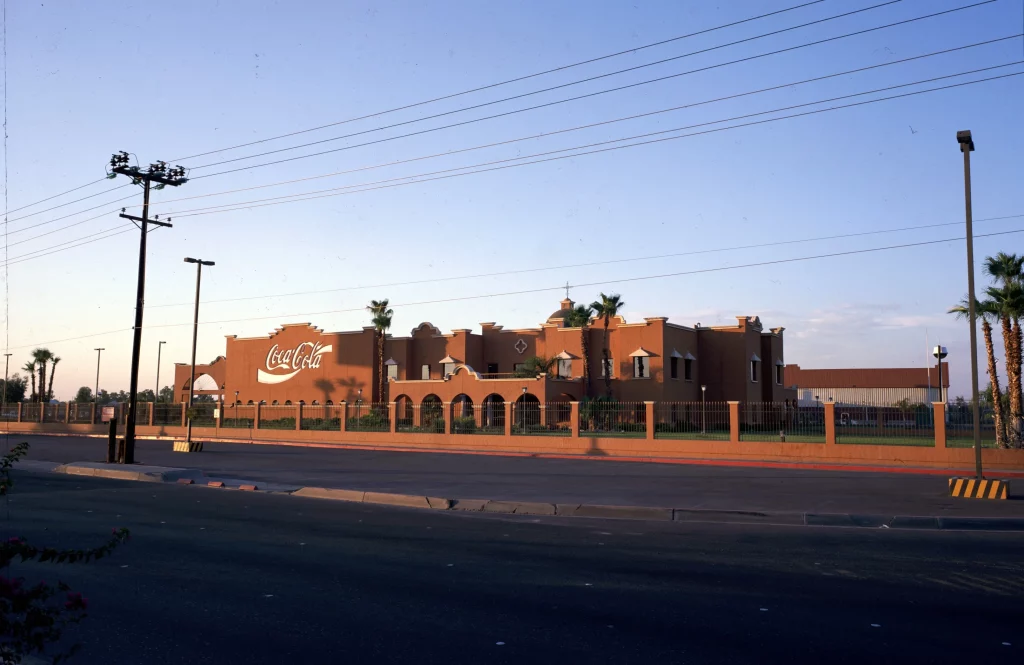
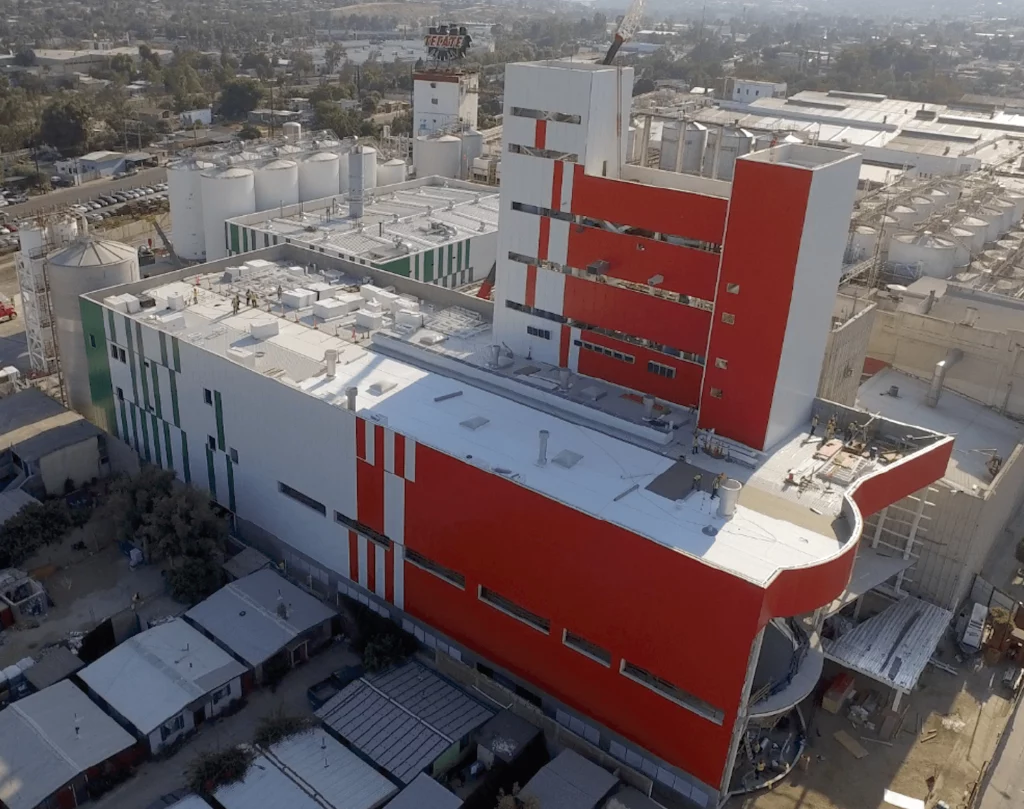
We have experience in the beverage industry, having built for brands like Heineken, Coca-Cola, and Constellation Brands. We have also helped develop facilities for products that require refrigeration and freezing chambers, like in the agriculture sector. Companies like Driscolls, Taylor Farms, and Empaque Quintana have benefited from our expertise in building this type of facility. Likewise, for the beef industry, we have built multiple slaughterhouses for brands like SuKarne.
Food & Beverage construction examples
Kellogg’s 287,396.41 sq ft (26,700 m2) production facility. We developed the design and built the production hall, administrative office, utility rooms, and outdoor area in Mexicali. Our team worked in compliance with state and local environmental regulations. Food production integrity was ensured by working within FDA guidelines.
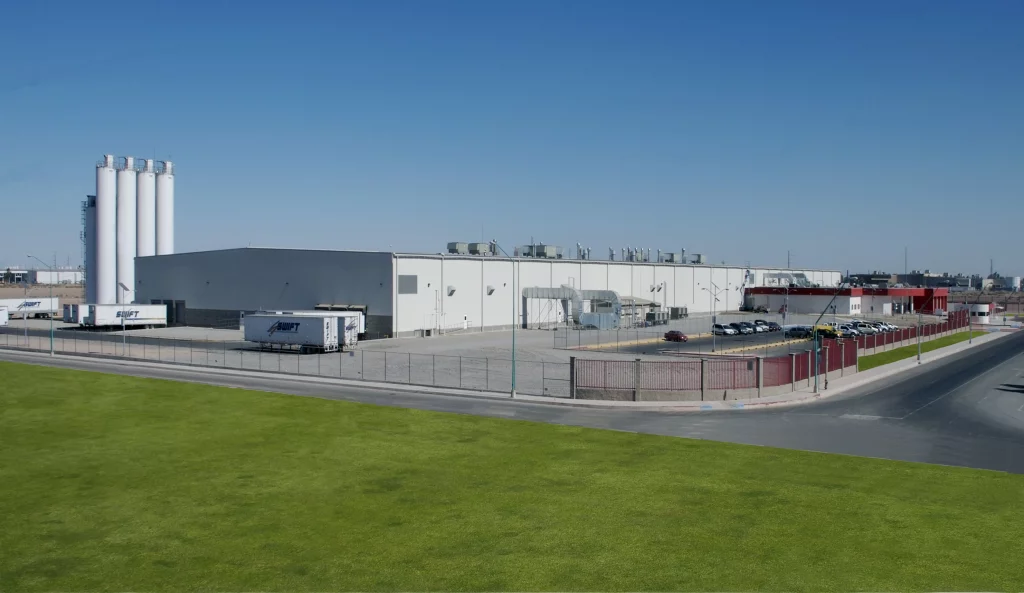
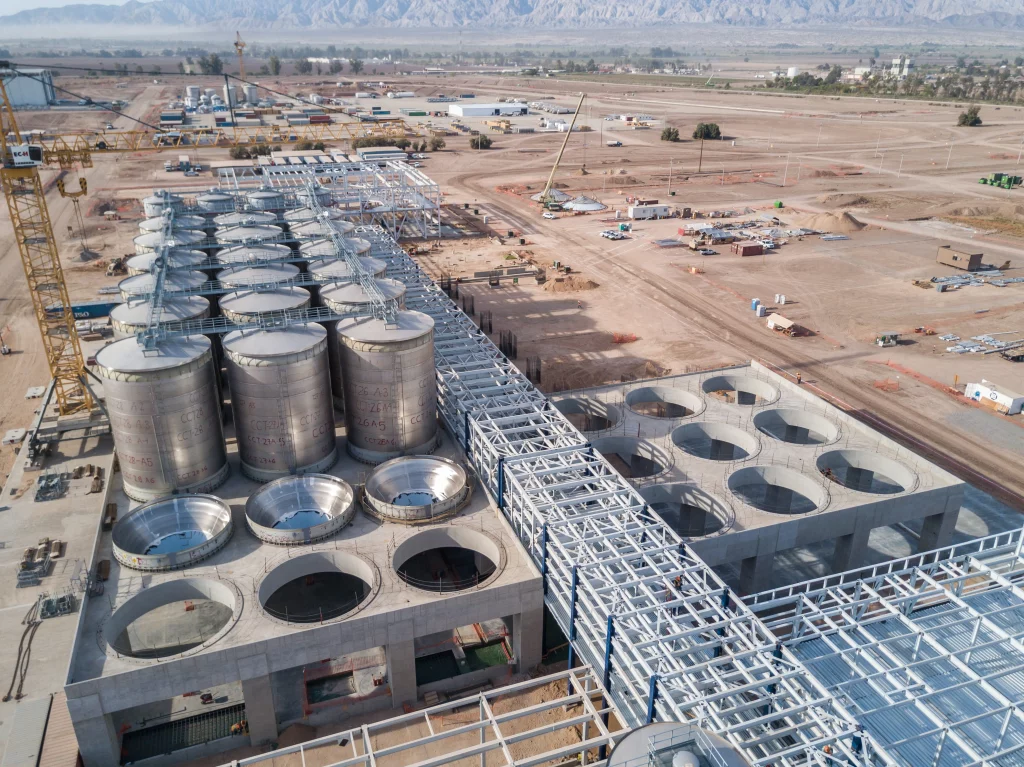
Constellation Brands’ three-building production site. In each building, we built concrete foundations, even when each presented its own set of challenges. To comply with the OSHA/STPS guidelines, we closely reviewed the Safety and Hygiene Plan and communicated it to the suppliers, contractors, and direct labor that worked on the project. The construction documents for each building were coordinated against that plan before work started.
Wrapping Up…
Mexico’s Food & Beverage industry is strong and constantly growing. Business owners are looking for ways to upscale their production by innovating their processes, expanding, and keeping a close eye on efficiency.
It’s important for contractors to keep pace with this rapid growth and change. It’s time to innovate with creative design solutions that are as flexible as they are functional during the construction process. The same goes for communication, where potential material supply shortages must be adequately planned for ahead of time.
Thanks to emerging technologies, it is easier than ever to develop comprehensive, effective construction plans that improve and deliver outstanding facilities.
Communication is another critical component to success. Getting food and beverage facility construction costs under control starts with the first conversation, not the first bid. If you are planning a food and beverage plant construction or a food processing facility